

The cost of manual identity verification is not the reviewer’s hourly rate. It is the reviewer’s rate multiplied by the queue, plus the customers who leave during the wait, plus the operational overhead of running a process across systems that do not talk to each other. Most organisations only measure the first term, which is why manual verification consistently looks cheaper on a spreadsheet than it is in the business.
This is a breakdown of the full cost structure, and of which parts automation genuinely removes rather than relocates.
The four costs, only one of which is usually counted
1. Direct review labour. Time spent examining a document, comparing a face, checking a name against a list. Visible, budgeted, and typically the smallest of the four.
2. Coordination overhead. Time spent finding the record, moving it between systems, chasing a second approval, re-requesting a document the customer already sent. This is process cost rather than review cost, and it scales with the number of systems involved rather than with volume.
3. Abandonment. Customers who begin onboarding and do not finish because the wait exceeded their patience. Charged to marketing as poor conversion rather than to operations as a verification cost, which is why it rarely appears in the business case for automation.
4. Inconsistency. Two reviewers reaching different decisions on comparable cases. The cost surfaces later — as a compliance finding, a remediation project, or a decision that cannot be defended to a regulator because it was not made against a stated standard.
Automation compresses the first two sharply, largely eliminates the fourth, and affects the third indirectly by removing the wait that causes it.
Why fragmentation costs more than manual work does
The dominant cost driver in manual operations is usually not that humans are doing the work. It is that the work is spread across systems with no shared record.
A documented example of the scale involved, from outside identity verification: DSS — the engineering team behind aIDentix — implemented ServiceNow ITSM for a global client with over 50,000 employees whose service management processes were fragmented across multiple disconnected systems. The specific problems were the ones fragmentation always produces: no automation, so inefficiency and high operational cost; limited visibility into IT and service data, because the data lived in separate places; and inconsistent service delivery, because there was no standard to deliver against.
The remedy was consolidation rather than headcount. Incident, change, problem and knowledge management on one platform; a configuration management database as the central asset record; a service catalogue for end-to-end request management; workflow automation across the processes themselves; and integration with the client’s existing systems so the transition did not require abandoning them.
The outcome: operational costs reduced by 60%, alongside a single source of truth for service data and faster issue resolution using the platform’s machine-learning capabilities.
To be precise about what that figure is and is not: 60% is the operational cost reduction achieved in that ServiceNow ITSM consolidation at a 50,000-employee organisation. It is not an identity verification benchmark and not an aIDentix product claim. It is cited here because the mechanism transfers even though the domain does not — the saving came from consolidating a fragmented manual process onto one system with automated workflow, and manual identity verification is fragmented in exactly the same way.
What a fragmented verification process looks like
If several of these are true, your verification cost is mostly coordination:
- Documents arrive by email or upload and are reviewed in a different system from the one holding the customer record
- Screening results live in a third place, usually a spreadsheet
- Determining a customer’s current verification status requires asking a person
- Reviewer decisions are recorded as a status change with no captured reasoning
- Producing an evidence pack for an auditor takes more than a few hours
- Nobody can state the current average time from submission to decision
That last one is diagnostic. An organisation that cannot measure its verification cycle time cannot be managing it, and the number is usually worse than the estimate.
What automation removes, and what it does not
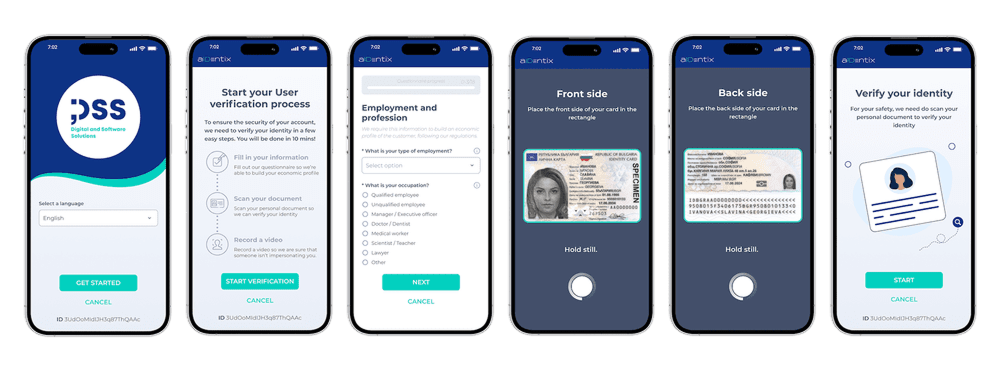
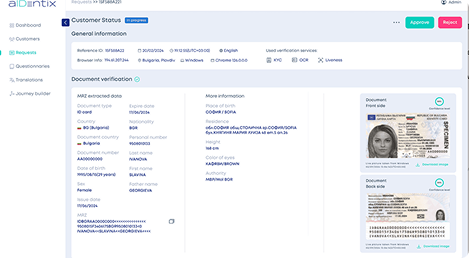
Removed almost entirely: document authenticity checks, data extraction from identity documents, face matching against the document portrait, liveness detection, watchlist and PEP screening, evidence capture, status tracking, and the routing of a case to the right reviewer. These are deterministic, repeatable and produce a structured record as a by-product.
Reduced, not removed: manual review. Automation should shrink the queue to genuinely ambiguous cases rather than eliminate it. A platform claiming zero manual review is either rejecting legitimate customers or accepting risk you have not agreed to.
Not removed: risk policy, enhanced due diligence judgement on complex cases, regulatory interpretation, and the decision about what your organisation does when a check is inconclusive. These are governance, and they should stay with humans.
The honest framing of the business case is therefore not “replace reviewers.” It is: reviewers stop spending their day on cases with obvious answers, and start spending it on the cases where their judgement is the actual product.
Working out your own number
Rather than accepting a vendor’s savings estimate, calculate four figures:
- Fully loaded cost per manual review. Reviewer time including the coordination around it, not just the review itself. Measure it; the estimate is usually low by a factor of two.
- Volume, including seasonal peaks. Peak capacity is what you staff for and therefore what you pay for, even in quiet months.
- Abandonment during verification. Multiply by acquisition cost. For most consumer fintech products this is the largest of the four and the least examined.
- Realistic automation rate. What proportion of your cases would clear automatically. Ask vendors for the figure achieved on portfolios resembling yours, not a headline maximum.
The result will be specific to your business, which is the point. A 60% figure from a different domain is a useful indication of what consolidating a fragmented process can do. It is not your number, and no vendor can tell you your number without seeing your volume mix.
The cost that is easiest to ignore
Of the four, abandonment is the one most often left out of the business case and most often the largest. It is invisible in operations reporting because the customer never became a customer — the loss lands in a conversion metric owned by a different team, attributed to a funnel problem rather than a verification one.
If verification takes minutes rather than days, that cost mostly disappears. That is generally where automation pays for itself, well before any reduction in review headcount.
aIDentix automates document capture, data extraction, face matching, liveness detection and database screening, with configurable questionnaires and a structured record for every check. It is built by DSS, whose consolidation and workflow automation work includes the ITSM implementation referenced above.
Frequently asked questions
What are the real costs of manual identity verification?
Four: direct review labour, coordination overhead from moving records between disconnected systems, customer abandonment during the wait, and inconsistency between reviewers that surfaces later as a compliance finding. Most organisations budget only the first, which is typically the smallest of the four.
Does automating identity verification replace manual reviewers?
No, and a platform claiming zero manual review is either rejecting legitimate customers or accepting risk you have not agreed to. Automation should shrink the review queue to genuinely ambiguous cases. Reviewers stop spending their day on cases with obvious answers and spend it where their judgement is the actual product.
How do I calculate the cost of manual identity verification?
Four figures: fully loaded cost per manual review including coordination, volume including seasonal peaks since peak capacity is what you staff for, abandonment during verification multiplied by acquisition cost, and a realistic automation rate for a portfolio resembling yours. Measure the first — estimates are usually low by a factor of two.
Which cost is most often left out of the business case?
Abandonment. It is invisible in operations reporting because the customer never became a customer, so the loss lands in a conversion metric owned by a different team and is attributed to a funnel problem rather than a verification one. For consumer fintech it is frequently the largest of the four.
How much can automation reduce operational costs?
It depends entirely on your volume mix, and no vendor can tell you your number without seeing it. As an indication of what consolidating a fragmented manual process onto one automated platform can achieve: a ServiceNow ITSM consolidation delivered by DSS for a 50,000-employee organisation reduced operational costs by 60%. That figure is from IT service management, not identity verification, and is not an aIDentix product claim.