

Most of what an organisation spends on KYC and AML compliance is not spent on judgement. It is spent on proving that judgement happened — collecting screenshots, reconciling spreadsheets, chasing approval emails and rebuilding the same evidence pack for the next audit. Automation removes most of that layer. It does not remove the risk decisions underneath it, and any vendor implying otherwise is describing a different product.
That distinction matters when you are budgeting. Compliance cost is usually discussed as if it were one number, which makes it look immovable. Split into its parts, roughly two thirds of it turns out to be clerical.
What actually drives KYC and AML compliance cost?
Four cost centres show up in almost every regulated organisation:
- Evidence collection. Gathering proof that a control was applied to a system, a customer or a transaction. This is the largest single cost and the most automatable.
- Control assessment. A compliance officer deciding whether the evidence satisfies the control. Partly automatable, fully auditable.
- Remediation tracking. Following an identified gap through to closure, across teams that do not share a system.
- External audit support. Time spent answering an auditor’s questions and producing samples on request. Priced per hour by the audit firm, so inefficiency here is directly billable to you.
The pattern that inflates all four is the absence of a single source of truth. When evidence lives in spreadsheets, the same artefact gets collected once for the SOX programme, once for PCI DSS, once for the internal audit function and once for whichever regulator asks next. Nobody is doing anything wrong. The data simply has no shared home.
Why does the same evidence get collected three times?
Because different compliance programmes evaluate the same underlying systems against different frameworks, and each programme builds its own collection process around its own framework.
A concrete version of this: in a GRC implementation carried out by DSS — the engineering team behind aIDentix — for a large corporation audited by Deloitte, KPMG, PwC and Ernst & Young, two internal stakeholders drove the requirements. The SOX compliance team prioritised audit management, engagement processes, evidence collection and remediation. The PCI programme had an entirely separate method for assessing compliance on the same systems. Both were correct for their own framework. Neither could reuse the other’s work, because neither had anywhere to put it that the other could read.
Before the implementation, much of that evidence was being assembled in Excel. The consequence was not primarily cost — it was blindness. There was no reporting layer, no visibility across programmes, and no repeatable process, which meant nobody could answer how much compliance was costing in the first place.
Which parts of compliance automate cleanly?
These automate well, in rough order of return:
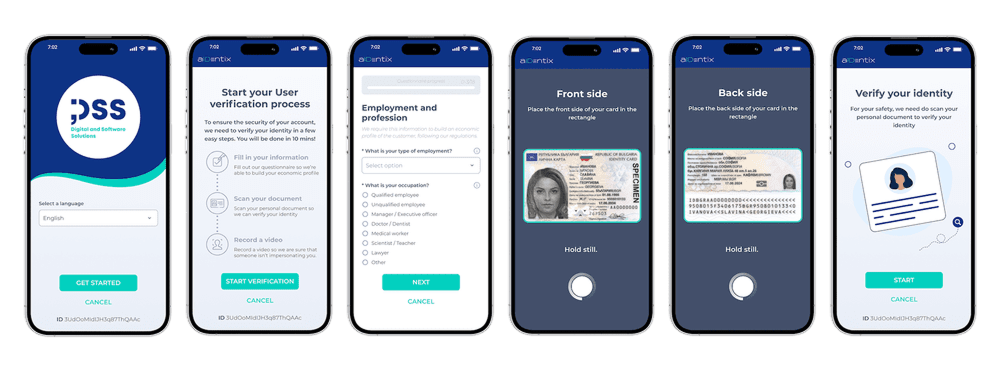
- Identity and document verification at onboarding. Document authenticity, data extraction, face matching and liveness detection are deterministic checks producing a timestamped, reproducible result. This is the part aIDentix addresses directly.
- Sanctions, PEP and watchlist screening. Continuous rather than point-in-time, with an audit trail generated as a by-product rather than assembled afterwards.
- Evidence capture. If the control runs inside a system, the system can record that it ran. The expensive version is a human proving after the fact that it did.
- Remediation workflow. Assignment, escalation and closure tracking are ordinary workflow problems once the data is in one place.
- Reporting. Dashboards that answer “what is our current control coverage” without anyone building a deck.
Which parts do not automate?
Three, and they are the ones that matter most:
Risk appetite. How much residual risk your institution accepts on a borderline customer is a governance decision. No system sets it for you.
Enhanced due diligence judgement. When a customer profile is genuinely ambiguous — unusual ownership structure, jurisdiction mismatch, adverse media of uncertain reliability — automation narrows the queue and surfaces the signal. A human still decides.
Regulatory interpretation. Where a rule is ambiguous or newly issued, someone has to decide what compliance looks like before it can be encoded.
A well-designed compliance stack does not try to replace these. It clears everything else out of the way so that expensive human attention lands on them instead of on document collection.
What changed when the evidence moved into one system
In the DSS implementation, the Policy and Compliance and Audit Management modules were configured so that compliance officers could assess each control through one process that integrated with the surrounding GRC modules, rather than through two parallel processes that shared nothing.
The specific pieces that carried the weight:
- Interactive dashboards built per management level, so an executive and a control owner saw the same underlying data at appropriate resolution — rather than an analyst rebuilding a summary for each audience.
- Dedicated workspaces, giving each stakeholder group direct access to its relevant data without searching the whole platform. Search time is a real and rarely measured compliance cost.
- A knowledge base, which shortened onboarding for new users — the recurring hidden cost in any compliance programme with staff turnover.
- An integration with SAP’s alert system, so operational alerts entered GRC processes automatically instead of being transcribed.
- An Azure Data Lake integration pushing SOX issues into Power BI, so reporting ran on the organisation’s existing analytics stack rather than a parallel one.
The result was a single source of truth that lowered audit and compliance expenditure while improving visibility for every party involved. Note the ordering: the visibility is what produced the saving, not the other way round. You cannot reduce a cost you cannot see.
How do you know whether your compliance costs are automatable?
Three diagnostic questions, in order:
Can you answer “what is our current control coverage” without asking anyone? If not, you are paying people to be a reporting layer.
When an auditor requests a sample, how long until you produce it? Hours is normal. Days means the evidence is being reconstructed rather than retrieved, and you are paying audit-firm hourly rates for the wait.
How many times is the same artefact collected across programmes? If SOX, PCI DSS and internal audit each collect it separately, the duplication is your automation opportunity — and it is usually the largest one.
If the answers are uncomfortable, the constraint is architectural rather than budgetary. More compliance headcount applied to a fragmented evidence base produces more fragmented evidence.
Where identity verification fits
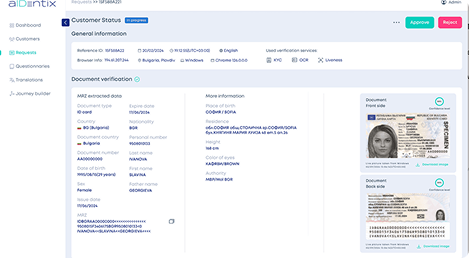
Customer identity verification is the point where compliance cost is either created or avoided, because it is the first control in the chain and the one that runs most often. A verification that produces a structured, timestamped, reproducible record — document authenticity, extracted data, face match, liveness result, screening outcome — is evidence that never has to be collected again. A verification that produces a scanned PDF in a shared folder is a future audit cost with a delay on it.
That is the design principle behind aIDentix: the output of a check is not just a pass or fail, it is the audit artefact. DSS, which builds the platform, has implemented GRC and compliance systems for organisations audited by the major international firms — the same problem viewed from the other end of the pipeline.
Frequently asked questions
What drives the cost of KYC and AML compliance?
Four cost centres: evidence collection, control assessment, remediation tracking and external audit support. Evidence collection is normally the largest and the most automatable. Costs inflate when there is no single source of truth, because the same artefact is collected separately for each compliance programme.
How can I automate KYC compliance processes?
The parts that automate cleanly are identity and document verification at onboarding, sanctions and PEP screening, evidence capture, remediation workflow and reporting. These are deterministic checks that produce a structured, timestamped record as a by-product rather than requiring one to be assembled afterwards.
Which parts of KYC compliance cannot be automated?
Risk appetite, enhanced due diligence judgement on genuinely ambiguous cases, and regulatory interpretation. These are governance decisions. A well-designed compliance stack clears routine work out of the way so human attention lands on these instead of on document collection.
What are the benefits of using AI-powered KYC compliance tools?
The main benefit is that a check produces its own audit artefact. A verification that outputs document authenticity, extracted data, face match, liveness result and screening outcome as structured data is evidence that never has to be collected again, which removes the largest single compliance cost centre.
How do financial institutions handle KYC compliance audits?
Efficiently, when evidence is retrieved from a single system; expensively, when it is reconstructed from spreadsheets across programmes. A practical test: when an auditor requests a sample, hours to produce it is normal, days means the evidence is being rebuilt and you are paying audit-firm hourly rates for the wait.